The Dublin City Marathon is an institution in Ireland and since 1980 the race has involved hundreds of thousand of runners and raised countless vital funds in support of many charities throughout Ireland, this year once again the event will feature some biobank warriors who will be running to support the work of Biobank Ireland trust in the over 26 mile event which starts from Fitzwilliam street and this year will have an incredible entry of over 20,000 runners from elite runners to walkers, here is hoping for a dry day and a successful finish !
Category: Biobank News
Tri-Athy Triathlon
Ciaran Flanagan, Andrew Butler and Paul Lyons participated in the Tri-Athy Triathlon recently in support of Biobank Trust Ireland. It was held over a rainy and blustery weekend in July 2022. With over 530 competitors this well organised annual event was well supported, TriAthy comprises a tough 750m swim in the River Barrow followed by a 25km cycle race and a final 10k run through the Kildare town. The three biobank warriors completed the course in fine style and raised funds for Biobank Ireland Trust through their great efforts, thank you and well done.
Womens Mini Marathon
On Sunday 5th of June a small team of Biobank Warriors took to the very wet streets of Dublin for the Women’s Mini Marathon! Despite the persistent rainfall from start to finish, spirits were not dampened and the atmosphere was electric with over 20,000 thousand participants pounding the pavement raising funds for various causes. This special 40th-anniversary event was back with a bang after a 2 year break. Starting on Fitzwilliam Place walkers and runners wound their way through Donnybrook, out to UCD and back into the city, finishing at Merrion Square. The team from WineOnline.ie are long-time supporters and friends of Biobank and so wanted to raise awareness and funds by completing the 10k together. If you want to run or walk a 10k or any race in aid of Biobank please contact the fundraising team on admin@biobankireland.com for a fundraising pack.
Biobank Warriors Raise €47,000
The annual Biobank Ireland Trust Golf Classic took place on the 17th June in Malahide Gold Club. With over 50 teams taking part this year and over 200 participants played on the day in wonderful sunny conditions this event has become a mainstay of many peoples golfing diaries for the year and this year raised over €47500 in support for the cause.
Biobank Ireland Trust would like to thank the organising committee for the exceptional work they have done for this years event, also thank you to all the sponsors and supporters and participants for what was the most successful event yet, for Biobank Ireland Trust
Freezer farm on the way
One of our key projects, St James’s Biobank Freezerfarm, has received full Planning Permission recently. This will be a 4 storey, 1072 sq. m., 14.02 metre high building with capacity for between 83 and 173 freezer units(depending on layout and usage of laboratory/office space.). This project will be delivered in partnership with TCD and St. James’s Hospital.
New Directors appointed to Biobank Ireland Trust in January 2022
- Dr Richard Flavin (St James’s Hospital),
- Laura Tier (St James’s Hospital),
- Prof Louise Burke (Cork University Hospital),
- Dr Sean Hynes (Galway University Hospital),
- Prof Aurelie Fabre (St Vincent’s University Hospital),
- Prof Jacqueline James (Queen’s University Belfast),
- Eddie Mullin (PPI representative)
- Gerry FitzSimons (PPI representative).
The new directors represent all four provinces. Their experience and commitment to collaboration in biobanking will be of inestimable value in developing an Irish biobank network.
Laura combines executive functions with strategic vision and Eddie and Gerry are actively involved in fundraising strategy and fundraising.
The Biobank under Lockdown: working from home
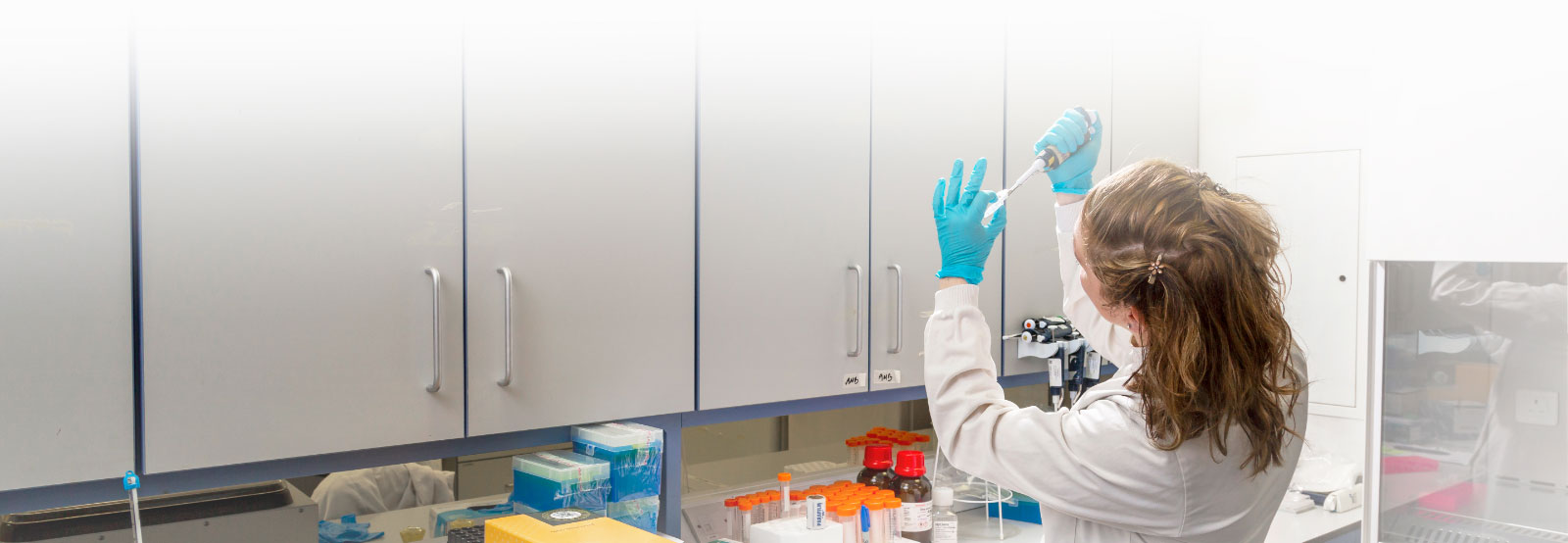
On the 12th March, I first became aware of this new term, social distancing. Little did I think when I left the office that day, that I would not return for an unknown number of weeks. It was not difficult to adapt to a changed work schedule. Rather than a twice-weekly 5.15 am rise to catch an early morning train to Dublin, I now spread my working hours over weekdays, starting each morning at 9.00 am. I had to familiarise myself with Zoom and the potential of technology for communication with colleagues. Zoom, emails, text, messages help us all to keep in touch, but emails and text messages in particular lack the non-verbal clues such as facial expressions, so essential in communication.
While it is not possible to complete practical aspects of Biobanking remotely, such as sample processing, data entry to the Biobank Information Management System or benchwork, it provides an opportunity to tackle tasks such as updating the quality manual, revising or reviewing SOPs, looking critically at what we can do better and how.
Meanwhile, back in the Histopathology Department, samples for Biobanking have ground to a halt. Cancer patients are having their surgeries done in private hospitals and it has not been possible to procure consent for biobanking.
The British politician Jacob Rees Mogg, sometimes referred to as the honourable member for the 19th century, recently commented: “During the plague, Parliament closed, but even I have moved on from 1349 and with the help of technology, Parliament will remain open during the COVID-19 pandemic”. So we too have to carry on and make the best of current circumstances with the help of technology.
Una Gibbons
Opinion: Irish Health Research and Public Benefit
* Minister Varadkar was asked by Finian McGrath TD if he will support Biobank Trust Ireland (sic) in 2015-2016 (details supplied); and if he will make a statement on the matter.The new Health Research Regulations (HRR), August 2018 (part of the Irish Data Protection Act, May 2018), in response to the EU General Data Protection Regulations (GDPR) require that patients give explicit consent for the use of their non-personal data in new medical research projects. However, a unique feature of the HRR is that if a research project is considered to be of significant public benefit and consent is not possible to obtain, a (highly detailed) application to a Committee may result in an exceptional declaration that consent is unnecessary.
Millions of potentially very valuable research tissue samples from patients’ operations have been stored in Irish pathology departments as part of clinical records over the last 40 years. These archival (i.e. pre-2018) samples are used if required during a patient’s next admission to hospital, for consultation or for medico-legal purposes. But archival tissue samples are also very widely used ethically and legally, in research worldwide, including in Ireland north and south. Research examination of the archival tissue together with linked patient data from hospital databases can be correlated with treatment response and disease outcome. Modern precision medicine and the development of new treatments for cancer and other diseases depend on being able to use archival tissue. Contacting all these patients for their consent is not feasible. Anonymous contact by post or by phone – years after an operation – is completely different to face-to-face explicit consent: it is distressing for patients and their families. Moreover, surveys show this is not what patients want. GDPR interpretation in other EU countries does not render highly valuable archival tissue burdensome to access for research. Furthermore, the European Data Protection Board has recently disagreed with the rigid approach to data protection in Ireland’s HRR.
Irish research projects are carried out safeguarding patient privacy and confidentiality, following scientific and ethical approval. Legal use of non-personal data associated with archival pathology samples should be based on their inestimable research value and the potential public benefit derived therefrom. The HRR make special provision for research of significant public benefit, but the enormous scale, diversity and uniqueness of non-personal data associated with archival samples makes multiple separate detailed applications to a Consent Declaration Committee inappropriate. Instead, this must be specifically addressed and clarified in an amendment to the HRR, in the public interest and for the sake of future patients.
Eoin Gaffney MD, March 11, 2019
REPLY
I acknowledge the benefits that would accrue from a national biobanking infrastructure. In 2012 the Health Research Group adopted a National Plan for Biobanking. An action “to take steps to establish a national biobanking system and support infrastructure by 2016” was subsequently included in the Action Plan for Jobs.
The Health Research Board, which is funded by my Department, has led work on the biobanking initiative with the relevant agencies and is progressing the initiative. It would, therefore, be appropriate for Biobank Trust Ireland to engage with the HRB on the matter.
See link to RTE news coverage of the “Biobank Ireland – Now We Are 10” meeting in September 2014.
www.rte.ie/news/2014/0911/642907-biobank/
GDPR and Cancer Research
Ireland’s new Health Research Regulations (August 2018) are part of the Data Protection Act (May 2018), enacted in response to the GDPR (General Data Protection Regulations) of the European Union.
The new Regulations will safeguard data privacy for patients who, having been fully informed, give consent to have their blood, cancer tissue and associated coded data used for research. Informed consent has been best practice and is now being complemented by more stringent requirements to safeguard patient data. Biobanks and researchers have adopted the Regulations for new research projects.
However, the research community has serious concerns about (1) the vulnerability of ongoing research projects and (2) the research use of archival diagnostic pathology samples and data, under the new legislation. There is active discussion among relevant stakeholders and with the Department of Health, amid genuine fears that research will be impeded rather than encouraged.
Biobank Ireland Shortlisted For A Prestigious Eir Spider Award
Biobank Ireland are delighted to be shortlisted for a prestigious Eir Spider award. Established in 1996, the eir Spiders are the longest standing and most prestigious internet awards in Ireland (including Northern Ireland). They reward Irish and Northern Irish businesses and community organisations for their creativity and innovation and provide an important opportunity to recognise and showcase online excellence.
Biobank Ireland was set up in 2004 to promote a bio banking network in Ireland. Biobank aims to bridge cancer research & care, gain a better understanding of cancer and to devise improved treatment.
Sadly, four out of ten people will be diagnosed with cancer during their lifetimes. The development of more effective, targeted treatments and tests for cancer depend on an increased understanding of cancer and how it can be treated. Large research studies (using cancer tissue samples stored in biobanks) are needed to correlate biology with clinical outcome. This is the rationale for an Irish Biobank Network
Biobank Ireland are honoured to be nominated for such a distinguished award that showcases online platforms. Learn more about Biobank Ireland and the many ways you can support this worthy cause.