The Biobank under Lockdown: working from home

On the 12th March, I first became aware of this new term, social distancing. Little did I think when I left the office that day, that I would not return for an unknown number of weeks. It was not difficult to adapt to a changed work schedule. Rather than a twice-weekly 5.15 am rise to catch an early morning train to Dublin, I now spread my working hours over weekdays, starting each morning at 9.00 am.  I had to familiarise myself with Zoom and the potential of technology for communication with colleagues.  Zoom, emails, text, messages help us all to keep in touch, but emails and text messages in particular lack the non-verbal clues such as facial expressions, so essential in communication.

While it is not possible to complete practical aspects of Biobanking remotely, such as sample processing, data entry to the Biobank Information Management System or benchwork, it provides an opportunity to tackle tasks such as updating the quality manual, revising or reviewing SOPs, looking critically at what we can do better and how.

Meanwhile, back in the Histopathology Department, samples for Biobanking have ground to a halt. Cancer patients are having their surgeries done in private hospitals and it has not been possible to procure consent for biobanking.

The British politician Jacob Rees Mogg, sometimes referred to as the honourable member for the 19th century, recently commented:  “During the plague, Parliament closed, but even I have moved on from 1349 and with the help of technology, Parliament will remain open during the COVID-19 pandemic”.  So we too have to carry on and make the best of current circumstances with the help of technology.

Una Gibbons

Opinion: Irish Health Research and Public Benefit

* Minister Varadkar was asked by Finian McGrath TD if he will support Biobank Trust Ireland (sic) in 2015-2016 (details supplied); and if he will make a statement on the matter.The new Health Research Regulations (HRR), August 2018 (part of the Irish Data Protection Act, May 2018), in response to the EU General Data Protection Regulations (GDPR) require that patients give explicit consent for the use of their non-personal data in new medical research projects. However, a unique feature of the HRR is that if a research project is considered to be of significant public benefit and consent is not possible to obtain, a (highly detailed) application to a Committee may result in an exceptional declaration that consent is unnecessary.

Millions of potentially very valuable research tissue samples from patients’ operations have been stored in Irish pathology departments as part of clinical records over the last 40 years. These archival (i.e. pre-2018) samples are used if required during a patient’s next admission to hospital, for consultation or for medico-legal purposes. But archival tissue samples are also very widely used ethically and legally, in research worldwide, including in Ireland north and south. Research examination of the archival tissue together with linked patient data from hospital databases can be correlated with treatment response and disease outcome. Modern precision medicine and the development of new treatments for cancer and other diseases depend on being able to use archival tissue. Contacting all these patients for their consent is not feasible. Anonymous contact by post or by phone – years after an operation – is completely different to face-to-face explicit consent: it is distressing for patients and their families. Moreover, surveys show this is not what patients want. GDPR interpretation in other EU countries does not render highly valuable archival tissue burdensome to access for research. Furthermore, the European Data Protection Board has recently disagreed with the rigid approach to data protection in Ireland’s HRR.

Irish research projects are carried out safeguarding patient privacy and confidentiality, following scientific and ethical approval. Legal use of non-personal data associated with archival pathology samples should be based on their inestimable research value and the potential public benefit derived therefrom. The HRR make special provision for research of significant public benefit, but the enormous scale, diversity and uniqueness of non-personal data associated with archival samples makes multiple separate detailed applications to a Consent Declaration Committee inappropriate. Instead, this must be specifically addressed and clarified in an amendment to the HRR, in the public interest and for the sake of future patients.

Eoin Gaffney MD, March 11, 2019

REPLY

I acknowledge the benefits that would accrue from a national biobanking infrastructure. In 2012 the Health Research Group adopted a National Plan for Biobanking. An action “to take steps to establish a national biobanking system and support infrastructure by 2016” was subsequently included in the Action Plan for Jobs.

The Health Research Board, which is funded by my Department, has led work on the biobanking initiative with the relevant agencies and is progressing the initiative. It would, therefore, be appropriate for Biobank Trust Ireland to engage with the HRB on the matter.

See link to RTE news coverage of the “Biobank Ireland – Now We Are 10” meeting in September 2014.

www.rte.ie/news/2014/0911/642907-biobank/

GDPR and Cancer Research

Ireland’s new Health Research Regulations (August 2018) are part of the Data Protection Act (May 2018), enacted in response to the GDPR (General Data Protection Regulations) of the European Union.

The new Regulations will safeguard data privacy for patients who, having been fully informed, give consent to have their blood, cancer tissue and associated coded data used for research. Informed consent has been best practice and is now being complemented by more stringent requirements to safeguard patient data. Biobanks and researchers have adopted the Regulations for new research projects.

However, the research community has serious concerns about (1) the vulnerability of ongoing research projects and (2) the research use of archival diagnostic pathology samples and data, under the new legislation. There is active discussion among relevant stakeholders and with the Department of Health, amid genuine fears that research will be impeded rather than encouraged.

Biobank Ireland Shortlisted For A Prestigious Eir Spider Award

Biobank Ireland are delighted to be shortlisted for a prestigious Eir Spider award. Established in 1996, the eir Spiders are the longest standing and most prestigious internet awards in Ireland (including Northern Ireland). They reward Irish and Northern Irish businesses and community organisations for their creativity and innovation and provide an important opportunity to recognise and showcase online excellence.

Biobank Ireland was set up in 2004 to promote a bio banking network in Ireland. Biobank aims to bridge cancer research & care, gain a better understanding of cancer and to devise improved treatment.

Sadly, four out of ten people will be diagnosed with cancer during their lifetimes. The development of more effective, targeted treatments and tests for cancer depend on an increased understanding of cancer and how it can be treated. Large research studies (using cancer tissue samples stored in biobanks) are needed to correlate biology with clinical outcome. This is the rationale for an Irish Biobank Network

Biobank Ireland are honoured to be nominated for such a distinguished award that showcases online platforms. Learn more about Biobank Ireland and the many ways you can support this worthy cause.

Biobank Ireland Team Complete Dublin City Marathon

After months of planning, training and pavement pounding our Biobank team ran Dublin City Marathon, raising an incredible €11,000 for Biobank Ireland.

While most of us were enjoying a lazy Bank Holiday Sunday, our team of 12 walked and ran a challenging 26 miles, raising much needed funds. All money raised will help promote a biobanking network in Ireland to bridge cancer research & care, gain a better understanding of cancer and to devise improved treatments. Well done and huge thanks to Alison Lee, Anne Burnham, Ciaran Flanagan, Geraldine Lynham, James Caffrey, John Quigley, Loraine Grant, Mark Sheehan, Martina Galligan, Michael O’ Brien, Teresa Ennis and Will Mullin who did us proud!

Well done to all involved and to those that sponsored our marathon champs! Want to start a fitness challenge while raising vital funds to support Biobank Ireland? Get in touch!

Will Mullin raised over €17k for Biobank Ireland, only €3k to go!

Will Mullin has raised over €17k for Biobank Ireland completing Marathon Des Sables, one of the world’s toughest challenges – the Marathon des Sables (a 257km run– five and a half marathons over six days), which the Discovery Channel has dubbed ‘the toughest footrace on earth’ commenced on April 10th, this year is also the longest in the race’s 31 year history.

Get a feel for the challenge from the man himself, in Will’s blog entry here:

“I got back from Morocco on Monday evening after arriving for the Marathon des Sables ten days earlier. After arriving in the desert on Friday night we were fed by the organisers and we were given local Moroccan food. Then we went to bed to endure our first night on the ground exposed to the sandstorm that levelled half the camp later that night. 

Administration , bag and medical checks on Saturday with the same food on offer. Then our second night sleep before we woke up Sunday morning when self sufficiency starts (this means nobody can feed you or help you in any way and you must carry and prepare your own food for the entire race. So when your marathon starts you have to take all of your stuff with you on your back.

Day 1 – Sunday 10th April

The first day of the race started with 15km of sand dunes as soon as the race began at 8.30am. My bag weighed 10 kilos with water and 8 without and all of this was on my back. The humidity was really low on day 1 and I knew that I would need to manage my water really carefully as it would be rationed out for the remainder of the week. Every participant got 12 litres per day but this was for drinking, eating and washing. There were people airlifted from the dunes in those first few hours and it hit home how quickly my race could end. After the dunes, we hit a sandstorm that lasted for over three hours. Finally got through that and there was another few km’s of dunes which was an awful sight. Finished a bit shocked and tired but ready for another day . 

With day one over and 5000 calories burnt I had to refuel but the food rations were tough to stomach. If I was going to survive in the race for the week, I knew I would need to consume at least 3000 calories every day. I was going to have to get on with eating dehydrated meals all week. Others weren’t so lucky and could not stomach their food. Common problems emerged quickly such as stomach cramps, diarrhoea and vomiting and it ended a lot of peoples races. 

In total 137 people dropped out of the Marathon des Sables during the week out of 1109 starters. The drop out rate this year was 15% compared with 5 – 10% most years. What made this year so tough? One element was the hight heat – It hit 48 degrees on the long stage day 4 during the 85 kilometer stage. This was compounded with a 5% humidity compared to 15% most years. It meant there was a dead heat and many competitors struggled to manage their water and hydration. They ran out of water and were taken off the course by helicopter. 

A 13 time MDS veteran from the UK, Mr Rory Coleman competed this year. He called the course this year ‘totally brutal…really brutal…really, really, fucking brutal and the toughest of his 13 years competing. As part of my diet during the race, I had to balance food intake, with liquid carbohydrates during the marathon stages, salt tablets to stabilise salts I was losing and electrolytes to rehydrate quicker that water might offer. 

The stages of the race were broken down as follows:

Day 1 – Sunday 10th April – 34.7km

Day 2 – Monday 11th April – 41.7km

Day 3 – Tuesday 12th April – 37.7km

Day 4 – Wednesday 13th April – 84.7km – took 16 hours to complete, last competitor came over the line in 34.5 hours.

Day 5 – Friday 15th April – 42.2km

Day 6 – Saturday 16th April – 17.7km – Unicef Solidarity Charity Stage

A typical day at the MDS involved waking up at 6 – 6.30 am and collecting your first rationed 1.5 litre water bottle. With this you would wash your teeth, use some water to rehydrate your breakfast – mostly dehydrated granola with raspberries – disgusting! Once that was done, it was time to rinse the water bottles with milton sterilising tablets, praying that the taste wouldn’t stay in the bottles all day – it did. On with some electrolytes in water to hydrate, salt tablets next and then pack up the bag and get going. We all wore the same clothes for 7 days so there was no need to change or wash, washing would waste precious water that we simply couldn’t afford not to drink. The water was always warm too.

After every stage I arrived back at the camp and the medical tent was like a warzone. People collapsing, vomiting , crying , getting drips pumped into them , feet ruined , people limping around everywhere . The queue had hundreds of people each night so I took to treating my own blisters and taped feet myself. I pretty much taped every moving muscle to save it from chaffing and it helped me in the later stages of the race. Two fellow competitors, both Irish, started to pass blood in their urine during the race. The doctors told them their bodies were so empty of resources that they were now burning protein in their muscles and the blood was the waste unneeded for fuel. That is how tough and serious it became for them and one dropped out immediately because it simply is not worth your health. He worked for 2 years for this race, but ‘it is just a race’.

On a plus with this race, the organisation was superb, given it was in the middle of the desert. Every single competitor was GPS Tracked for the whole race (introduced after one man got lost in a sandstorm for 10 days in 1995 and survived on bat blood and urine until he was found) It meant supporters back home could track us each day, watch a live webcam at the finish line every day and send live messages that were delivered to us in the camp each night. 

I came home in 224th place and was second Irish person home. In truth, I am so happy to come home from this race with a medal that positions just do not matter. I could have easily fallen medically or with dehydration, or blistered feet but I navigated my way through the problems and was lucky to come out the other side, with a medal I have wanted to own for 20 years.”

You can sponsor Will on his Biobank fundraising page and help him raise his €20,000 fundraising target. It’s not too late to sponsor! Help him get over the final finish line!

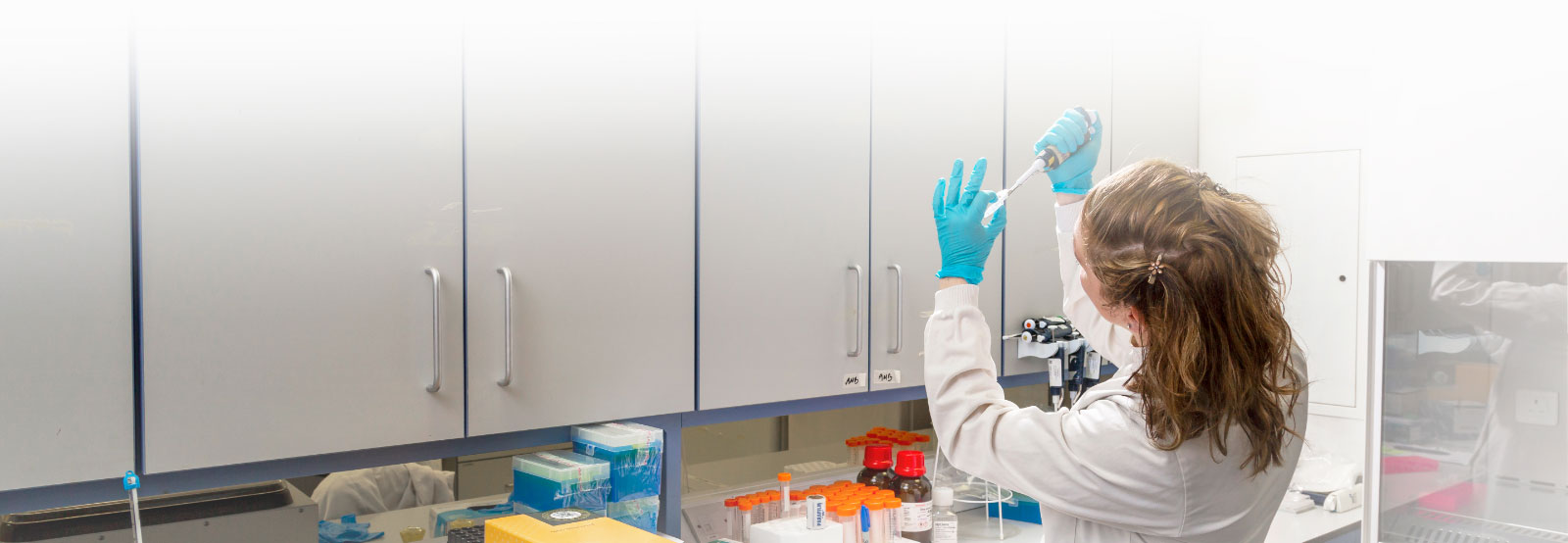
Join Team Biobank this October and run the Dublin Marathon for Cancer Research.

Take on the Dublin Marathon in support of Biobank Ireland and join the race against cancer. We are looking for keen individuals, be it a beginner runner or an athlete to come together and train under the guidance of Will Mullin and form a team to take on the Dublin Marathon in aid of Biobank Ireland next October.

Will Mullin has ran over 40 marathons, among them 15 at the Dublin Marathon. He has just returned from the Sahara where he completed the Marathon des Sables, 6 marathons in 6 days dubbed the toughest footrace on Earth. With a Personal Best in the Marathon of 2.52 in Dublin, he is looking for ten to twenty runners to join him on team Biobank to raise much needed funds for cancer research in 2016.

If you’ve never run a marathon before, you are perfect! Will is looking for people who have dreamed of completing the distance and he will help you get there. He will create a bespoke training plan for you and will meet monthly to run with you, motivate you and amend your training plan as you progress and get closer to Marathon Monday.

What you need to do: We are asking you to raise a minimum of 1,500 with our help for Biobank cancer research. 

How to join: You can register your interest by contacting Elaine Kelly on elaine@ideadigital.ie or +353851070118.

Play your part in supporting cancer research in Ireland!

Our Scientific Partners & Supporters

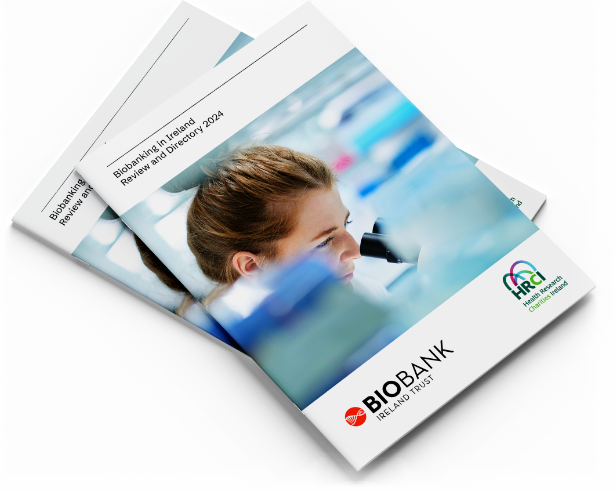
The Biobanking in Ireland Review and Directory

Introducing the Biobanking in Ireland Review and Directory, a comprehensive resource compiling detailed information on Ireland’s key biobanks, their leadership teams, research focus areas, and capabilities to support collaboration and advance scientific discovery. We will circulate this Directory in the coming months. If you are a biobank and wish to participate, please reach out to us for inclusion.